
INSIGHT-CPR featured in MAX Magazine
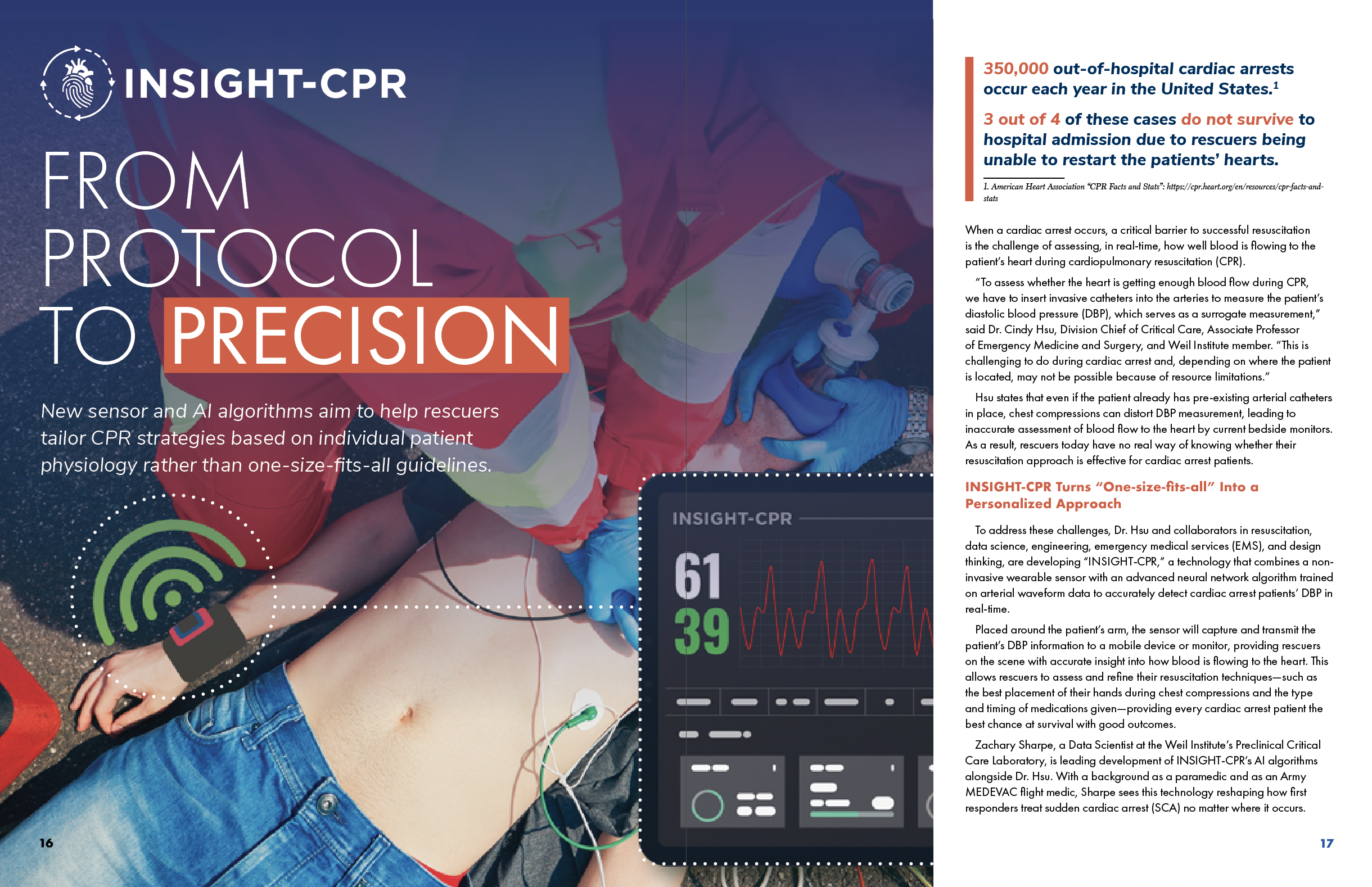
The following article was produced for the Spring 2026 edition of MAX Magazine, the official magazine of the Max Harry Weil Institute for Critical Care Research and Innovation at the University of Michigan.
From Protocol to Precision
When a cardiac arrest occurs, a critical barrier to successful resuscitation is the challenge of assessing, in real-time, how well blood is flowing to the patient’s heart during cardiopulmonary resuscitation (CPR).
“To assess whether the heart is getting enough blood flow during CPR, we have to insert invasive catheters into the arteries to measure the patient’s diastolic blood pressure (DBP), which serves as a surrogate measurement,” said Dr. Cindy Hsu, Division Chief of Critical Care, Associate Professor of Emergency Medicine and Surgery, and Weil Institute member. “This is challenging to do during cardiac arrest and, depending on where the patient is located, may not be possible because of resource limitations.”
Hsu states that even if the patient already has pre-existing arterial catheters in place, chest compressions can distort DBP measurement, leading to inaccurate assessment of blood flow to the heart by current bedside monitors. As a result, rescuers today have no real way of knowing whether their resuscitation approach is effective for cardiac arrest patients.
INSIGHT-CPR Turns “One-size-fits-all” Into a Personalized Approach
To address these challenges, Dr. Hsu and collaborators in resuscitation, data science, engineering, emergency medical services (EMS), and design thinking, are developing “INSIGHT-CPR,” a technology that combines a non-invasive wearable sensor with an advanced neural network algorithm trained on arterial waveform data to accurately detect cardiac arrest patients’ DBP in real-time.
Placed around the patient’s arm, the sensor will capture and transmit the patient’s DBP information to a mobile device or monitor, providing rescuers on the scene with accurate insight into how blood is flowing to the heart. This allows rescuers to assess and refine their resuscitation techniques—such as the best placement of their hands during chest compressions and the type and timing of medications given—providing every cardiac arrest patient the best chance at survival with good outcomes.
Zachary Sharpe, a Data Scientist at the Weil Institute’s Preclinical Critical Care Laboratory, is leading development of INSIGHT-CPR’s AI algorithms alongside Dr. Hsu. With a background as a paramedic and as an Army MEDEVAC flight medic, Sharpe sees this technology reshaping how first responders treat sudden cardiac arrest (SCA) no matter where it occurs.
“Due to technological gaps and lack of personnel, prehospital systems can lag behind hospitals in their ability to provide personalized care,” said Sharpe. “By developing a device that can perform real-time analytics using embedded AI, it will help us to not only improve resuscitation outcomes in the field, but to also potentially deploy future AI-based methods in EMS or combat casualty care scenarios without the need for an internet connection.”
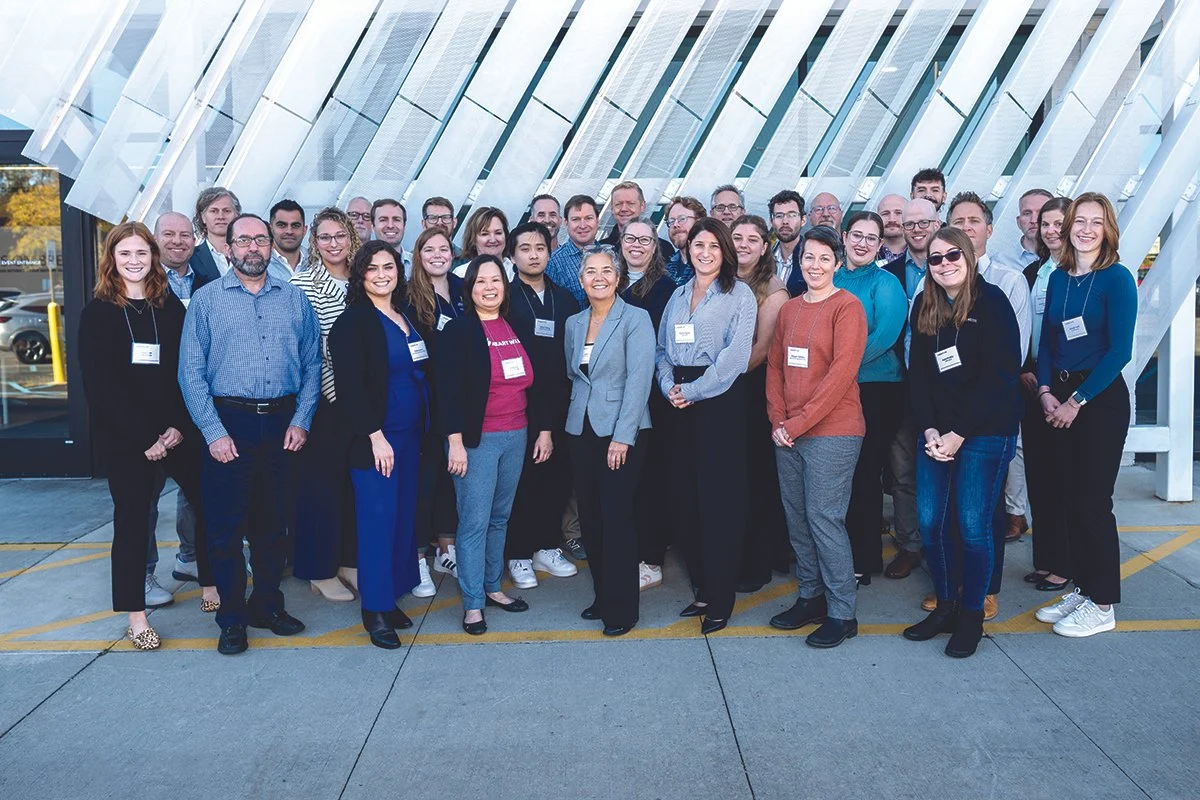
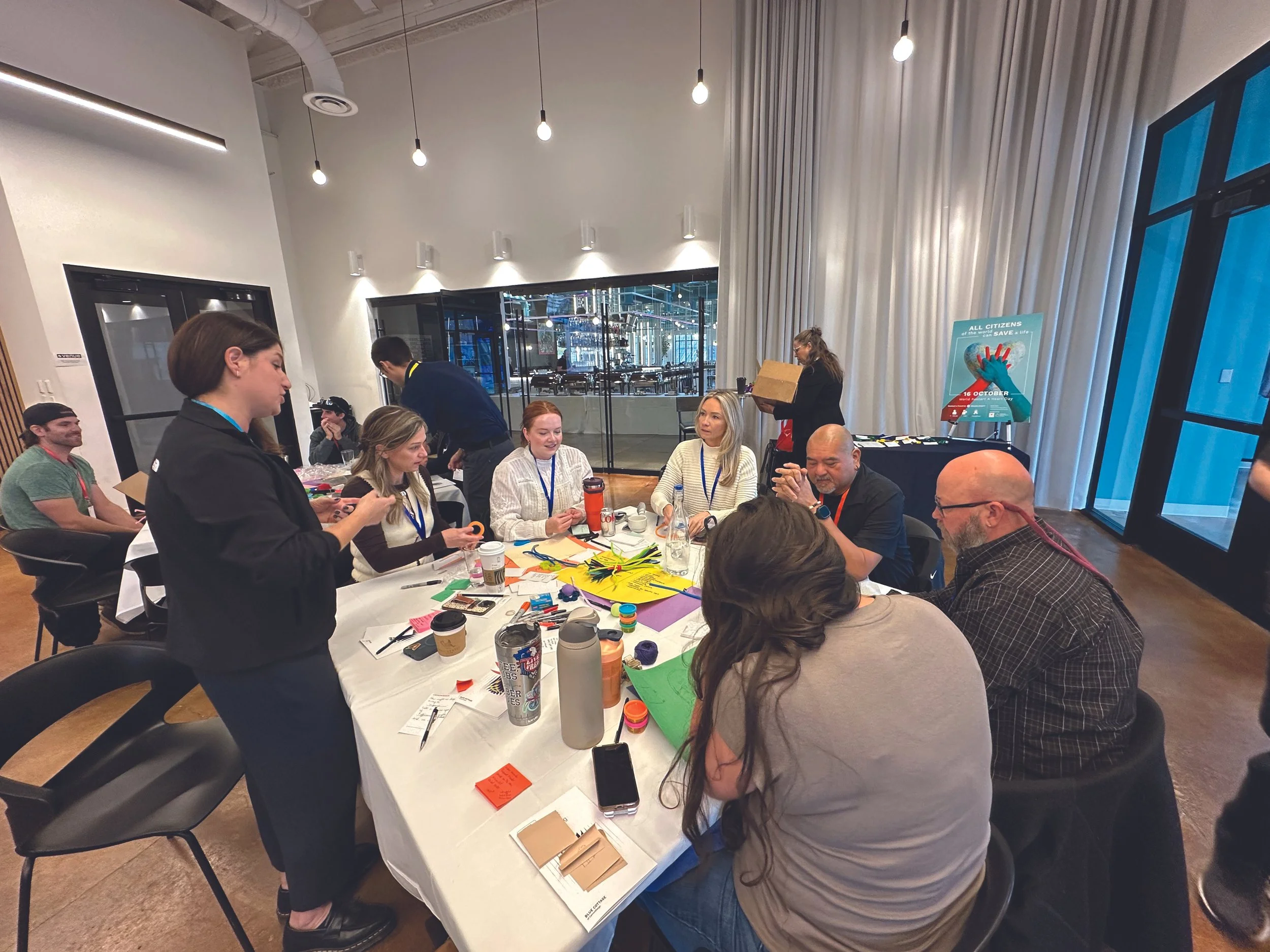
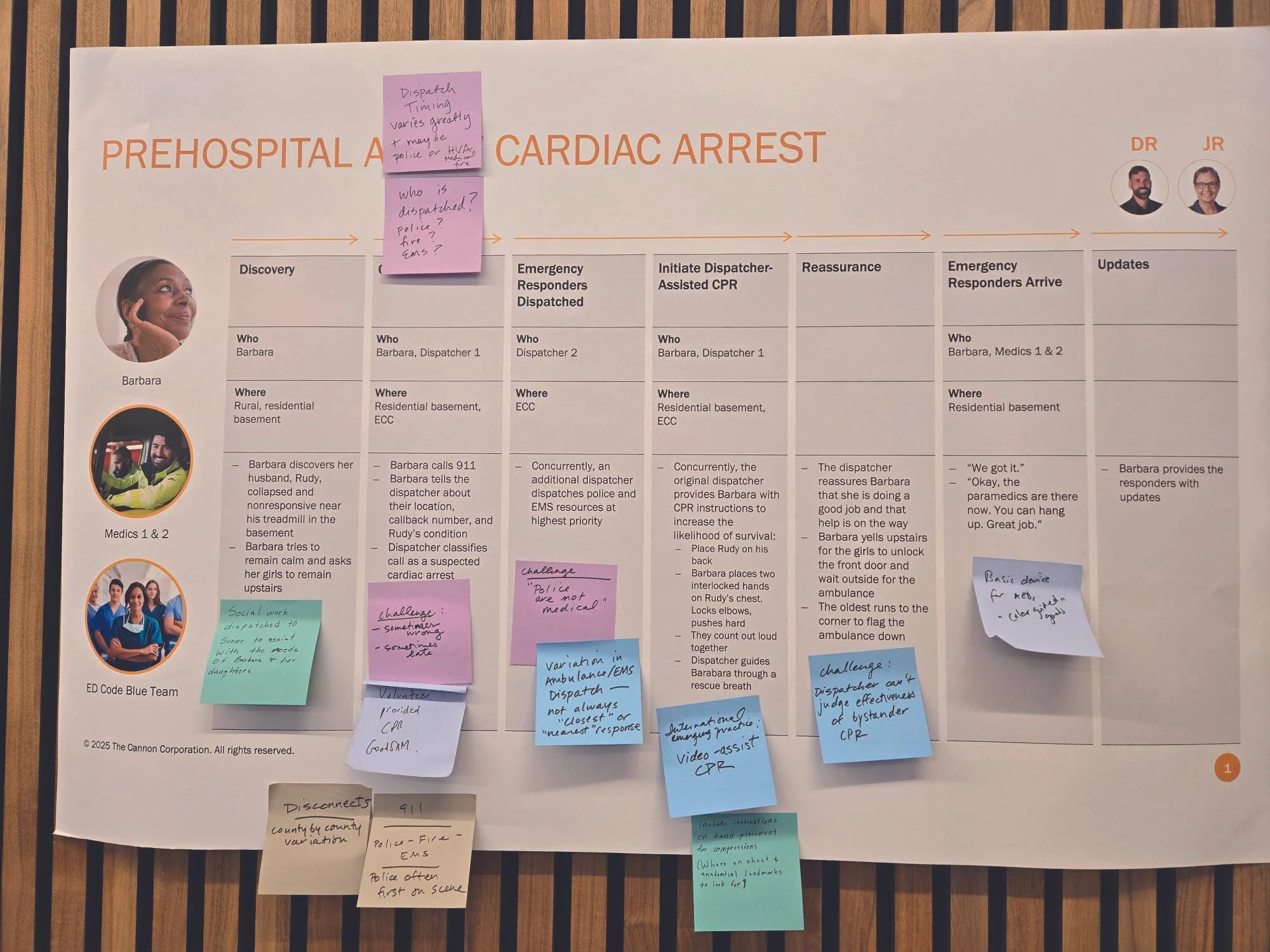
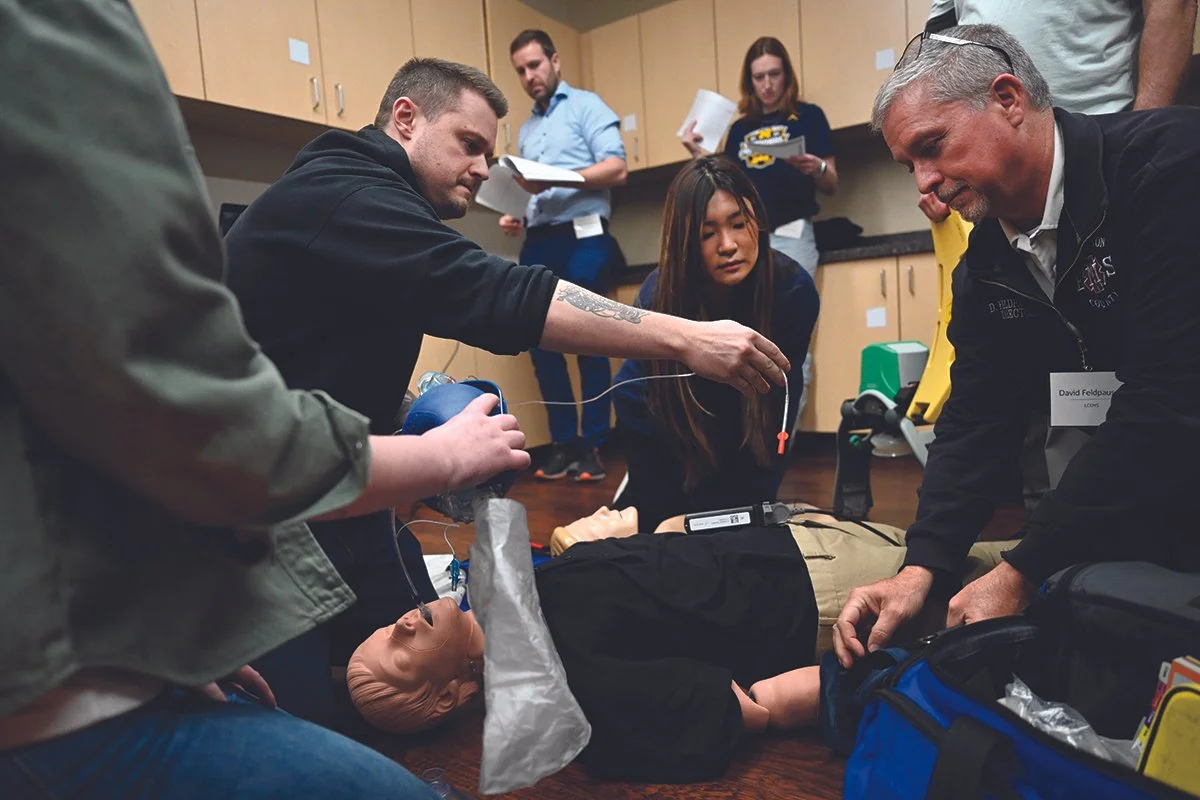
Image Gallery: Scenes from the INSIGHT-CPR Design Thinking workshops. INSIGHT-CPR is being designed in direct collaboration with end users, from prehospital first responders to in-hospital and air medical transport teams.
Combining Global Expertise
At the core of the INSIGHT-CPR project are a series of synergistic collaborations between the Weil Institute, (including members in Michigan Medicine and the U-M College of Engineering), the Children’s Hospital of Philadelphia (CHOP), the East Anglian Air Ambulance (EAAA) in the United Kingdom, and consultancy groups Blue Cottage of CannonDesign and In2Being.
The Weil Institute Proposal Development Unit assisted Dr. Hsu and her team in the writing and submission of two successfully funded grants for INSIGHT-CPR, including the $5.5 million American Heart Association award as well as a $100,000 grant facilitated through Weil’s Kahn Pediatric Critical Care Grand Challenge.
The Weil Institute’s Data Science Team is managing the training and validation of the INSIGHT-CPR neural network models using diverse sets of adult and pediatric cardiac arrest waveform data provided by Michigan Medicine (adult in-hospital SCA), EAAA (adult out-of-hospital SCA), and CHOP (pediatric in-hospital SCA from the ICU-RESUS multicenter study). The EAAA dataset will be especially informative, as EAAA physicians place arterial catheters for OHCA patients in the prehospital setting—something that is not feasible for most emergency medical service agencies.
The INSIGHT team’s sensor is being adapted from previous iterations developed by project co-investigator Dr. Kenn Oldham, Professor of Mechanical Engineering and an Associate Director of the Weil Institute. Weil’s Preclinical Critical Care Laboratory, led by project co-investigator Dr. Hakam Tiba, is aiding the team in testing prototypes of the sensor in a large animal model of cardiac arrest with the goal of gauging the device’s compatibility with defibrillation, determining its accuracy in detecting DBP during CPR, and comparing the effectiveness of DBP-directed CPR strategy guided by INSIGHT-CPR to current advanced cardiovascular life support protocol.
“While we designed our sensor to measure changes in arterial properties, we discovered some time ago that manipulating pressures applied to the sensor lets us measure underlying blood pressure with high accuracy,” said Dr. Oldham. “This project gives us a chance to use that capability to directly address a pressing challenge in emergency medicine, with direct input from clinicians and other healthcare providers on critical features needed to improve outcomes of CPR.”
Blue Cottage of CannonDesign is facilitating design thinking workshops to iteratively refine the prototypes using human-centered design through end-user engagement. In addition, they are providing a go-to-market strategy to accelerate INSIGHT-CPR’s commercial launch. In2Being is providing prototype development and FDA regulatory support.
Finally, INSIGHT-CPR has also benefited from the fastPACE program available through the University of Michigan’s Fast Forward Medical Innovation (FFMI) initiative, which helped Dr. Hsu and her team craft a compelling pitch to the sponsors.
“For other big killers like cancer, we know the patients’ tumor genetics and can tailor their treatments accordingly. But for cardiac arrest, every patient gets the same exact resuscitation protocol regardless of their individual physiology,” said Dr. Hsu. “Our goal is to fundamentally change how cardiac arrest is treated by removing the need for invasive monitoring, taking out the guesswork for rescuers and tailoring resuscitation strategies to the patient. Even if we can save an additional 10% of patients, that’s over 60,000 more lives saved from in-hospital and out-of-hospital cardiac arrest each year.”